
Checklist for a low-voltage service and maintenance contract
What must be written in a service contract for cameras, alarms, access control and fire detection, so service works on the day you really need it.
November 2026 · 5 min read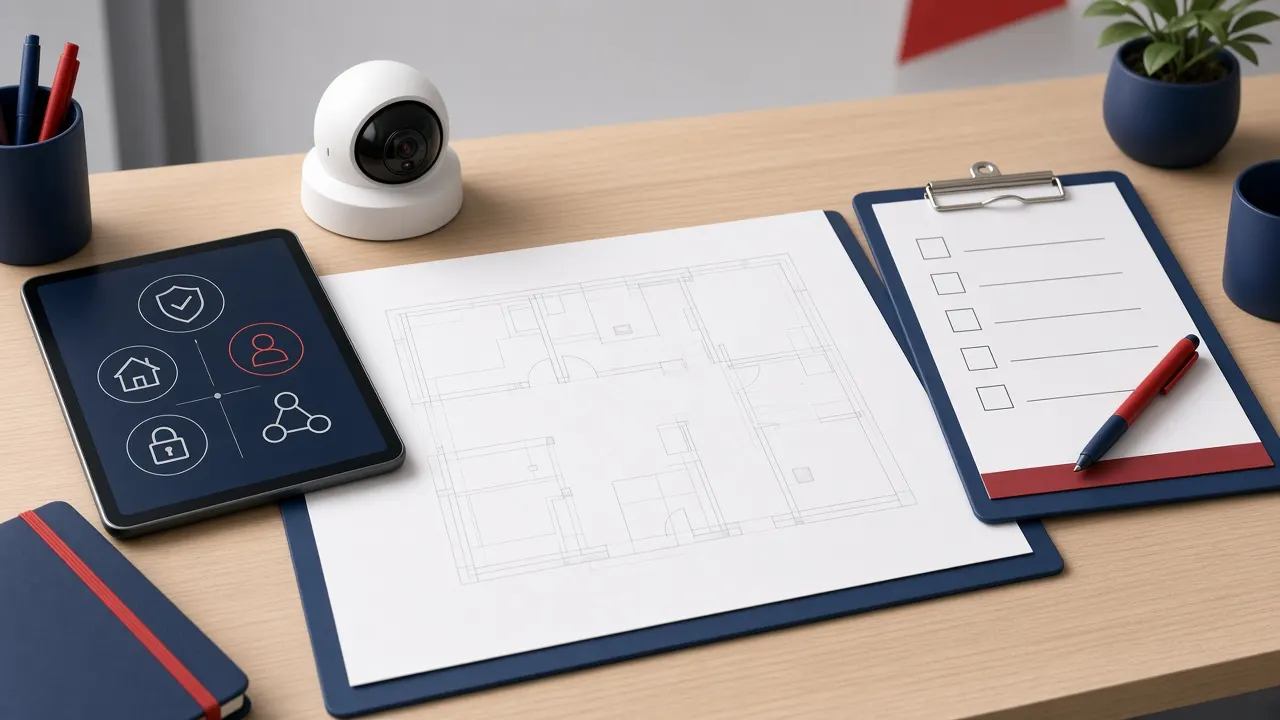
A good security system is one that works on the day of the incident. In practice many systems fail not because of poor equipment but because of missing maintenance: a full disk, a camera that has shifted, a flat battery or a dirty detector. An organised service contract is the way to prevent this.
1. Scope: what is included
- A list of covered systems and sites, with an attached equipment list.
- Preventive maintenance (periodic inspections) versus fault service.
- Whether spare parts are included, and to what extent.
- Firmware and software updates, including security updates.
- Remote service and on-site service.
2. Service levels (SLA)
A good contract defines urgency levels rather than "we'll come quickly". For example: a critical fault (alarm system down, recorder not recording), a normal fault (a single camera), and a change request. For each level, response and resolution times agreed between the parties, and what counts as a "response". The times themselves are a matter for negotiation and depend on location and system type.
3. Request channels
- A phone number and/or WhatsApp and email for opening a ticket.
- A ticket number and record for every request.
- A responsible contact on the contractor's side and the client's side.
- A procedure for out-of-hours, if needed.
4. Preventive maintenance: what is checked
- Cameras: angle, focus, cleanliness, night illumination.
- Recording: capacity, actual retention, disk health, synchronised clock.
- Alarms: detectors, batteries, communication to the monitoring centre over two paths.
- Access control: locks, power supplies, backup of the permissions database.
- Fire detection: according to the standard and manufacturer instructions, recorded in the log.
- Network: switches, UPS, cabinets.
5. Reports and documentation
A report after each visit, a summary of recurring faults and upgrade recommendations. For chains, a consolidated report for all branches. Up-to-date documentation for each site (drawings, addresses, models) should remain available to the client.
6. Cyber and privacy
- Who holds the passwords and how they are managed.
- A secure remote access procedure.
- Confidentiality of the client's video and data, in line with privacy law.
- Replacing equipment that is no longer supported.
7. Equipment warranty versus service
A manufacturer's warranty on equipment is not the same as a service contract. The contract should clarify who handles warranty replacement, how long it may take, and whether temporary replacement equipment is available.
8. Termination and transition
What happens at the end of the contract: handover of documentation, passwords and configuration, and a transition period. Such a clause protects the client and prevents lock-in.
Example service-level structure
- Level 1, critical: an alarm system not reporting, a recorder not recording, a fire detection fault.
- Level 2, high: several cameras down at a site, a door that will not lock.
- Level 3, normal: a single camera, a display problem.
- Level 4, request: settings change, new user, moving a camera.
For each level the parties agree response and resolution times together, according to location and site type.
Metrics to request in reports
- Number of tickets by level and by site.
- Actual response and resolution times versus agreed.
- Recurring faults in the same component or site.
- Percentage of working cameras at inspection.
Comparing service offers
When comparing providers, ask them all to answer the same list: what is included, inspection frequency, what counts as critical, how remote service works, and what happens with an out-of-hours fault. Comparing on price alone can miss material differences in scope.
The client's role
The client also has a part: an available contact, site access, orderly fault reporting and notice of changes to the building or staff. That cooperation shortens resolution times.
Periodic inspection: an example visit
- A short meeting with the site contact: any faults or changes since the last visit?
- Recorder check: actual retention, disk status, clock.
- Walk through every camera: daytime image, a night check from the recording, cleaning as needed.
- Alarm check: trigger sample detectors and confirm receipt at the monitoring centre on both paths.
- Access control check: lock and release, event log, backup.
- Check the communications cabinet and UPS.
- Summary and report with findings and recommendations.
Budget planning
A service contract also allows better budget planning: instead of unexpected costs for each fault, there is a fixed cost and a replacement plan for components nearing end of life. Inspection reports are a good basis for next year's budget.
Spares and stock
In a chain with uniform equipment, holding a small stock of common spares (one camera of each model, a disk, a power supply, a detector) allows replacement on the first visit instead of waiting for an order. Define in the contract who holds the stock, where, and how its use is recorded. This is also a good reason to keep the number of models small.
Updating the contract
A service contract should be updated when the system changes: a new branch, extra cameras or a new system. Updating the covered equipment list with every change prevents disputes when a fault occurs.
Summary
A good service contract is written, measurable and documented. It defines what is checked, when, and what happens in a fault, and lets you compare providers fairly. Zohar Cameras provides monthly service to chains such as Wolt Market, Rami Levy Stock and Big Fashion.
Want to check what fits your site?
Leave your details and we will get back to you to arrange a survey and quote.
Sources
- Standards Institution of Israel
- INCD – security camera recommendations v1.7 (Hebrew)
- Israel Privacy Protection Authority – Amendment 13 guide (Hebrew)
Articles provide general information only and are not legal, engineering or safety advice. Regulatory requirements change; check the current text with the competent authority.
Related articles
15 questions to ask a low-voltage contractor before you sign
Simple questions that reveal the difference between a quote and a project that will work for years: experience, authorisations, design, cyber, documentation and service.
November 2026 · 4 min read
Guide: cameras for a retail chain, from the first branch to dozens of sites
How to plan a uniform camera system for a chain: a branch standard, central management, rollout schedules and ongoing service.
November 2026 · 4 min read
Modern intrusion alarms: wireless, app control, video verification and dual-path communication
What has changed in business alarm systems: cloud-connected panels, encrypted wireless detectors, visual event verification, and what the 2G/3G network shutdown means.
November 2026 · 5 min read