
Guide: cameras for a retail chain, from the first branch to dozens of sites
How to plan a uniform camera system for a chain: a branch standard, central management, rollout schedules and ongoing service.
November 2026 · 4 min read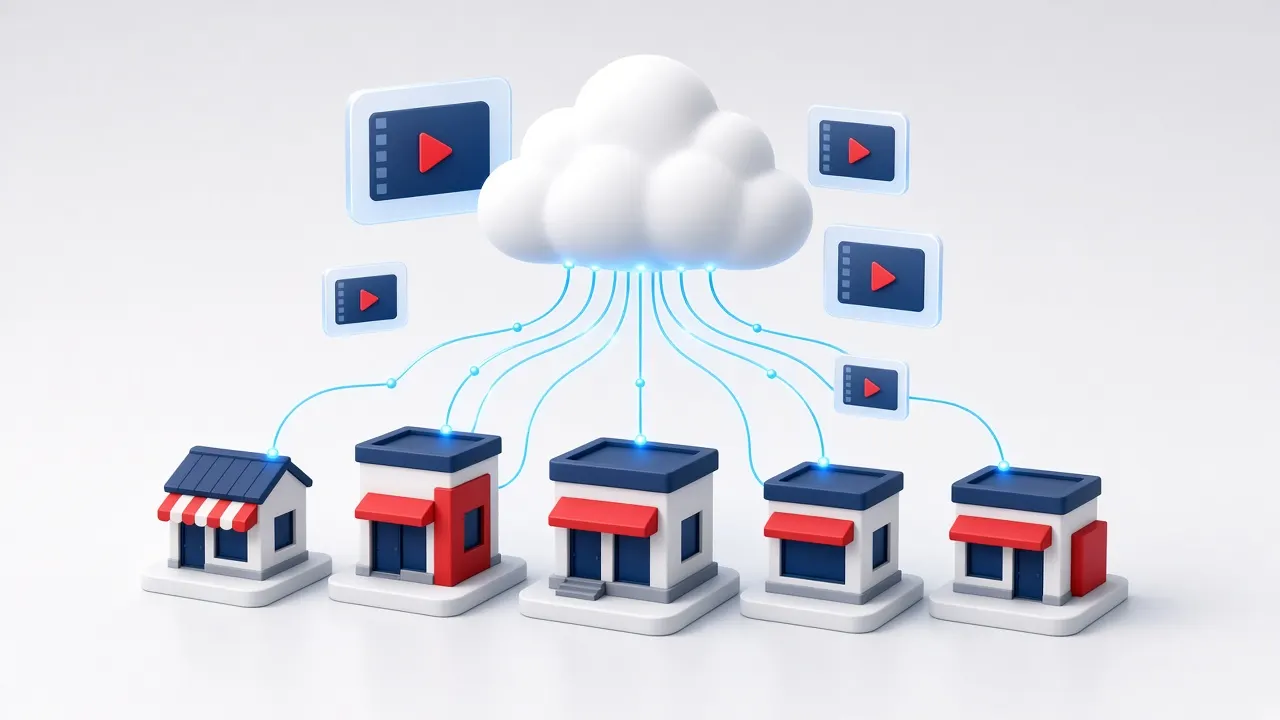
A retail chain is not "lots of small shops". It is an organisation that needs uniformity, central management, comparable data and service that reaches every branch, from the big city to the periphery. From experience working with chains of dozens of branches, these are the steps that make the difference.
1. Define a "standard branch"
The first step is a standard document: which points are covered in each branch (entrance, tills, stockroom, loading bay, safe, parking), which camera type for each point, what level of detail is needed and the retention period. The standard lets you assess each branch quickly and compare quotes.
2. Choosing the technology
- IP cameras from a limited number of models: easier to maintain and to hold spare stock.
- A local recorder in each branch, with central or hybrid cloud management.
- Basic analytics to reduce false alarms, and sometimes customer counting.
- Integration with the alarm system and with access control for the stockroom and office.
3. Network and communications
In each branch define a separate camera network, check the internet line (especially upload speed) and plan secure remote access. In line with INCD recommendations, recorders should not be exposed directly to the internet.
4. Pilot
Before a wide rollout, install one or two branches, test the standard in the field, gather feedback from branch managers and security, and update the document. This avoids copying a mistake to dozens of branches.
5. Rollout plan
- Prioritise by risk, condition of the existing system and refurbishment plans.
- Work at hours that do not hurt sales: nights, early mornings.
- Permanent teams who know the standard.
- Full documentation for each branch: drawing, equipment list, addresses, managed passwords.
- Orderly handover to the branch manager and the security department.
6. Privacy and employees
A chain's cameras film both employees and customers. According to the Privacy Protection Authority's guidelines, you need a defined purpose, signage, notice to employees, limited retention and viewing permissions. Amendment 13 to the Protection of Privacy Law sharpens responsibility. It is worth adopting a uniform camera policy for the whole chain.
7. Ongoing service
In a deployment of dozens of branches, service matters as much as installation. Set up a service contract with a clear request path, health monitoring, periodic inspections and reports. See also our service contract checklist.
8. Success metrics
- Percentage of cameras working at any given time.
- Time to locate a video clip for an incident.
- Number of site visits saved thanks to remote diagnosis.
- Satisfaction of branch managers and security.
Example branch standard document
- Main entrance: identification-level camera with WDR.
- Tills: a camera for each till area, focused on the payment area.
- Sales floor: overview cameras covering the aisles.
- Stockroom and loading bay: overview cameras and a camera on the delivery door.
- Office/safe: a dedicated camera alongside the alarm.
- Exterior: front and parking cameras as needed.
- Recording: local recorder, uniform retention, power backup.
Such a document lets you assess every branch with the same template and add adjustments only when genuinely needed.
Why uniform equipment matters
When all branches use the same models, a technician arriving at a branch already knows the system, spare parts are available and firmware updates are done centrally. Many different models make maintenance more expensive and repairs slower.
Working in a live branch
Installing in a trading branch requires coordination: work at quiet hours, keep customers safe, keep the old system running until the new one works, and hand over properly to the branch manager. This planning minimises the impact on sales.
Central versus branch viewing
A chain usually has two types of users: branch managers, who need to see their own branch and find local incidents, and security or management, who need a view of the whole chain. Plan permissions and interface for both: for the branch manager, a simple app with only their branch; for the central team, a management system showing all branches, system health and events.
Shrinkage and operations
Cameras in a retail chain are used not only against break-ins but also to review till events, deliveries and the stockroom. Combining till data with video, where systems support it, makes it quick to find the clip for a particular transaction. Again, consider employee privacy and define the use in policy.
A new branch
When a new branch opens, the standard lets you build low-voltage systems into the fit-out design: cabling points, cabinet location, conduit for exterior cameras. Early coordination with the architect and main contractor avoids double work.
Closing or relocating a branch
Closing or relocating a branch also needs planning: keep recordings for the required period, reuse equipment where possible, securely wipe data from disks taken out of service, and update the central management system. A clause like this in the chain standard prevents a recorder full of customer and employee video sitting unattended in a storeroom.
Summary
A chain camera system succeeds when it is uniform, documented and centrally managed, and backed by service that reaches every branch. Zohar Cameras works with chains such as Wolt Market (all branches in Israel and monthly service), Rami Levy Stock and Big Fashion on monthly service.
Want to check what fits your site?
Leave your details and we will get back to you to arrange a survey and quote.
Sources
- Israel Privacy Protection Authority – cameras in the workplace (Hebrew)
- INCD – security camera recommendations v1.7 (Hebrew)
- IEC Webstore – IEC 62676-4 (Video surveillance, application guidelines)
Articles provide general information only and are not legal, engineering or safety advice. Regulatory requirements change; check the current text with the competent authority.
Related articles
Cloud video (VSaaS) and hybrid VMS: when it makes sense for a business or chain
Manage cameras from anywhere, automatic updates and a monthly fee, alongside questions of bandwidth, data retention and security. A decision guide.
November 2026 · 5 min read
Checklist for a low-voltage service and maintenance contract
What must be written in a service contract for cameras, alarms, access control and fire detection, so service works on the day you really need it.
November 2026 · 5 min read15 questions to ask a low-voltage contractor before you sign
Simple questions that reveal the difference between a quote and a project that will work for years: experience, authorisations, design, cyber, documentation and service.
November 2026 · 4 min read