
System convergence: PSIM, smart buildings and one control room for everything
Cameras, alarms, access control, fire detection and building systems: how to bring everything into one picture, and what to watch out for.
November 2026 · 4 min read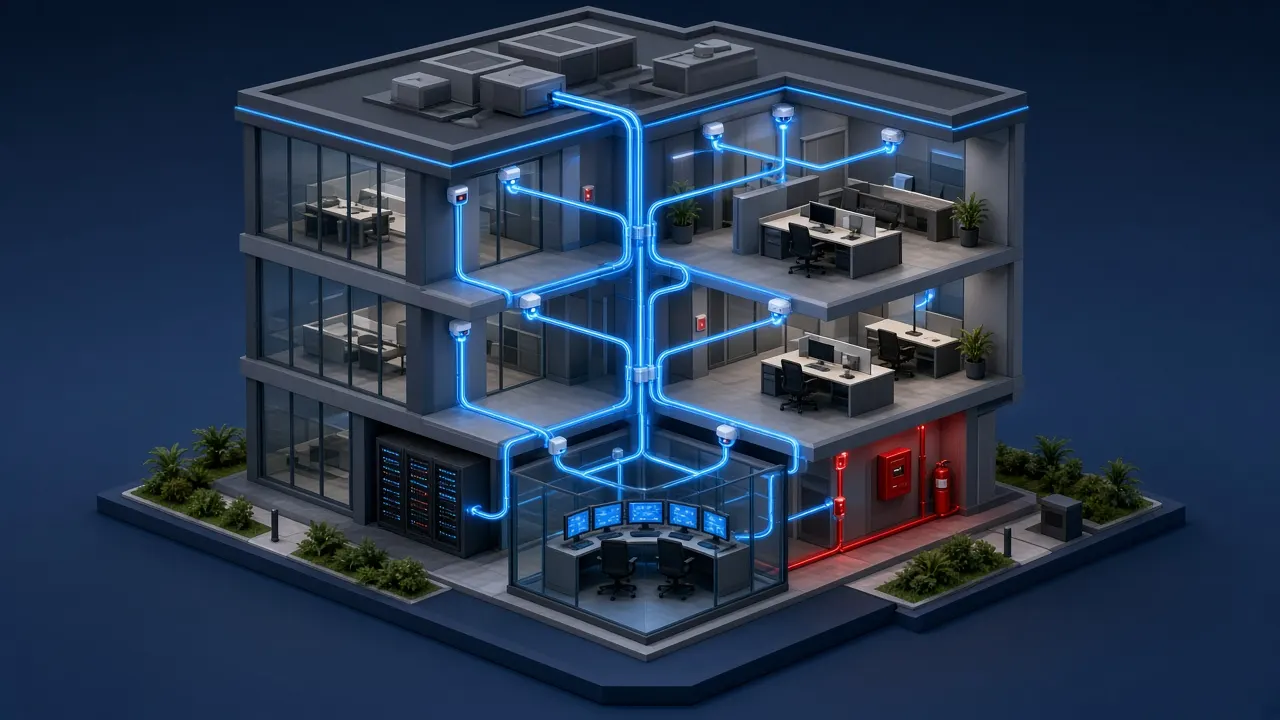
In the past every low-voltage system stood alone: one operator facing a wall of camera screens, a separate alarm panel, access control software and yet another fire panel. The global trend in recent years is convergence: connecting systems to one platform and shared workflows.
What is PSIM
PSIM (Physical Security Information Management) is a software layer that receives events from many systems, shows them on a single map and guides the operator according to procedure. For example: an alarm at a branch automatically opens the relevant cameras, shows contact details and logs the handling. Today some VMS and access control systems offer similar capabilities themselves, so a separate platform is not always needed.
Smart buildings
In modern buildings, security systems also connect to the building management system (BMS): HVAC, lighting, lifts and energy. Access control can turn on lighting and air-conditioning only in occupied areas, and fire detection triggers defined scenarios in building systems. Protocols such as BACnet and Modbus, alongside modern APIs, make the connection possible.
Benefits
- One situational picture and faster response.
- Uniform logging of events and handling.
- Less operator workload through automated procedures.
- Operational data: occupancy, operating hours, recurring faults.
Risks
Convergence increases the attack surface: if everything is connected, a breach of one component can affect others. Network design with separation, permission management and monitoring is therefore a basic condition. Another risk is dependency: if the central platform fails, each system must continue to operate independently. Life-safety systems such as fire detection must keep their function and approvals without depending on other systems.
How to start
- Map existing systems, manufacturers and versions.
- Define business scenarios: what should happen when event X occurs.
- Check which interfaces exist and which require development.
- Start with one high-value integration (for example alarm-to-video) and expand gradually.
- Decide who maintains the interfaces over time.
The role of a low-voltage contractor
A contractor who installs and maintains several systems sees the whole picture: cabling, network, configuration and connection points. That is a significant advantage in a convergence project, where most faults are found precisely between systems.
Example: a night-time event at a branch
At 2 a.m. a detector on a branch's back door triggers. In an unplanned setup, the monitoring centre gets an alarm, calls the keyholder, and someone tries to connect to the cameras remotely. In a converged system, the alert appears on the branch map, the camera nearest the door opens automatically with footage from the seconds before, the access control log shows whether a badge was used, and the operator gets a checklist of what to do. Every action is logged for the report.
Example: an office building
In the morning, the first employee's badge entry turns on lighting and air-conditioning on that floor. In the evening, when the last person leaves and the alarm is armed, systems switch to saving mode. On fire detection, lifts behave according to the design, escape-route doors release and the PA system activates. These scenarios require coordination between several vendors at the design stage.
Choosing a platform
- Support for existing manufacturers and systems.
- Open interfaces and API documentation.
- Ability to work across multiple sites.
- Permission management and an activity log.
- Local support and the ability to maintain it for years.
Common pitfalls
- Integrations built without documentation that break on a software update.
- A flood of alerts that burdens the operator instead of helping.
- No ownership: nobody is responsible for the interface between two systems.
Maturity stages: where are you starting from
- Stage 1, separate systems: each with its own software and interface.
- Stage 2, point links: for example an alarm that brings up a camera, or access control that logs video.
- Stage 3, a shared interface: one control room seeing events from several systems on a map.
- Stage 4, automated processes: response procedures, shared reports and integration with building systems.
Most organisations do not need to jump straight to stage 4. Moving gradually, with clear value at each stage, reduces risk and cost.
The role of the network
Convergence relies on a reliable network: if systems talk over the network, a network fault is a fault in every system. So plan power backup for switches, redundancy at critical points, logical separation between systems and accurate documentation. This is where infrastructure design and security design meet.
Data and operations
Beyond security, connected systems produce useful data: actual branch opening and closing times, visitor counts, recurring faults in certain components. Simple analysis can improve maintenance and expose operational problems, provided data access follows the organisation's privacy policy.
Example of a staged rollout in a chain
A chain can start by linking alarms to cameras in every branch, so each alert arrives with an image. Next, add central health monitoring for all recorders and panels. Then integrate access control for stockrooms and offices, and finally bring all events into one control room. Each stage delivers value on its own, and you can stop or change direction without losing the investment.
Summary
System convergence is a clear direction in the industry and enables better security and management. Success depends on gradual planning, cyber security and keeping critical systems independent.
Want to check what fits your site?
Leave your details and we will get back to you to arrange a survey and quote.
Sources
Articles provide general information only and are not legal, engineering or safety advice. Regulatory requirements change; check the current text with the competent authority.
Related articles
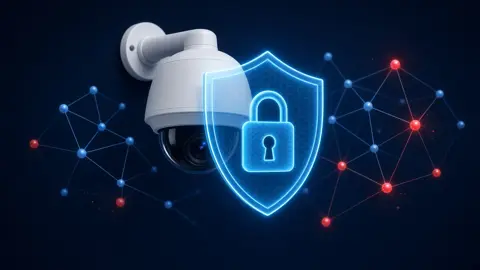
OT cyber security for low-voltage systems: the network behind cameras and controllers
Security and building systems are part of the OT world. IEC 62443 principles, network separation, remote access management and secure maintenance.
November 2026 · 4 min read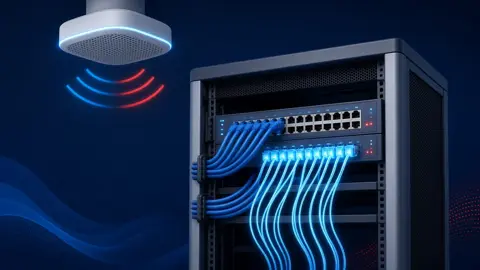
Infrastructure that lasts a decade: Cat6A, fibre, PoE++ and Wi-Fi 7
Cameras, readers and access points all depend on infrastructure. What to install today so you will not be opening walls again in five years.
November 2026 · 4 min read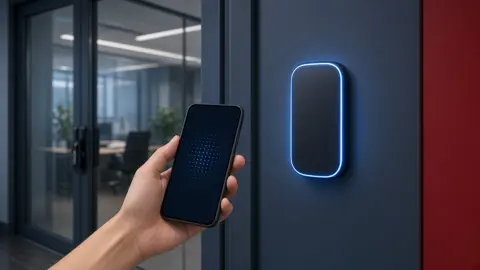
Access control and intercom in 2026: phone as credential, biometrics, cloud and IP
Mobile credentials, secure readers, cloud management and IP intercoms that integrate with cameras. What is new and what to check before replacing a system.
November 2026 · 4 min read