
Access control and intercom in 2026: phone as credential, biometrics, cloud and IP
Mobile credentials, secure readers, cloud management and IP intercoms that integrate with cameras. What is new and what to check before replacing a system.
November 2026 · 4 min read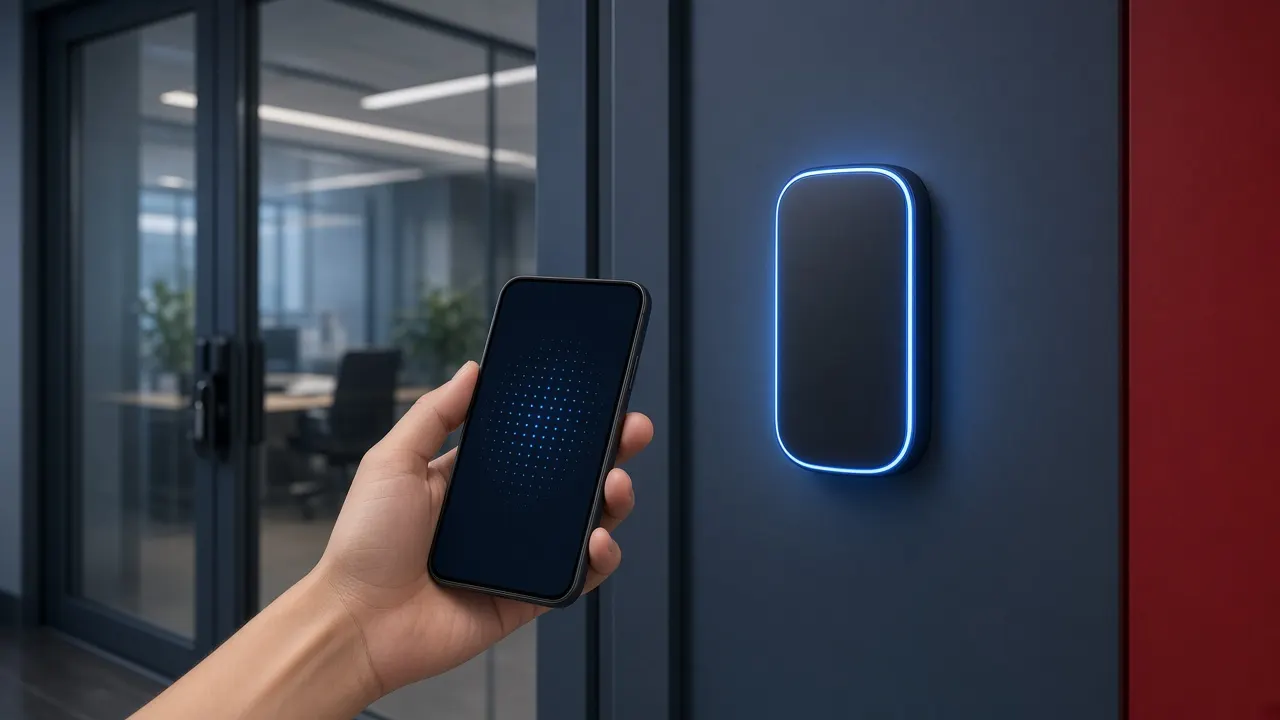
Access control has long been more than an electric lock and a card. In organisations and office buildings it has become a physical identity management system: who enters, where, when, and what happens when an employee leaves. Meanwhile the intercom has moved from an analogue phone at the door to an IP video station that integrates with the smartphone.
Mobile credentials: the phone as a badge
Phone-based identification (BLE or NFC) is spreading quickly. Employees receive a digital credential sent remotely, and in some systems it can also be stored in the phone's digital wallet. Benefits: no cards to print and distribute, permissions can be revoked instantly, and the phone is protected by its own biometric lock. Check compatibility with existing readers and plan a solution for employees or visitors without a suitable phone.
Securing communication: from Wiegand to OSDP
The long-established Wiegand protocol, which connects readers to controllers, is unencrypted and known to be vulnerable to eavesdropping and cloning. OSDP, developed under SIA and also standardised by the IEC, enables encrypted two-way communication (Secure Channel) and supervision of readers. In a new project or a significant upgrade, consider readers and controllers that support OSDP, and replace old proximity cards with more secure technologies.
Biometrics
Face and fingerprint readers are more common, especially for sensitive rooms. They prevent cards being passed between people, but biometric data is sensitive information under Israel's Protection of Privacy Law. Using it requires a review of necessity and proportionality, consent and notice to employees, database security and sometimes an alternative for those who do not wish to use it. It is also worth reviewing the relevant Privacy Protection Authority guidance.
ACaaS: access control as a service
As with video, access control is moving to a cloud model: managing permissions for all sites from one interface, central reports and managed updates. In distributed organisations this makes adding and removing employees and managing subcontractors much easier. Here too, the local controller must keep working during an outage.
IP intercom
IP intercom stations offer high-quality video, door opening from an app, routing to several answering points and integration with the recording system. In an office building the intercom can be linked to access control and the phone system. Points to check: cyber security (as with cameras), weather and vandal resistance, accessibility, and behaviour during a power or network outage.
Integration
The big value comes when systems talk to each other: a forced door brings up the nearest camera, a rejected badge is logged with video, and on fire detection doors on escape routes release according to the design and requirements. Such integration requires early planning of controllers, network and operating scenarios.
Selection checklist
- Number of doors and sites, and expansion plans.
- Credential types: card, phone, PIN, biometrics.
- Support for secure protocols and integration with video.
- Behaviour on failure: fail-safe versus fail-secure according to door type and safety requirements.
- Local or cloud management, and administrator permissions.
- Maintenance, backup of the permissions database and software updates.
Example: a three-floor office
In an office with a main entrance, a server room and a management suite, you can define: all staff enter the main entrance during working hours; only IT staff enter the server room at any time; and the management suite opens only for authorised people. When an employee leaves, one cancellation removes all their permissions immediately. A visitor gets temporary access for the hours of the visit only.
Credential types compared
- Card: familiar and cheap, but can be lost and passed on.
- PIN: no physical item, but easy to share.
- Phone: convenient and revocable remotely, dependent on battery and compatibility.
- Biometrics: cannot be passed on, but requires privacy considerations and a secure database.
- Combination (for example card plus PIN): suitable for sensitive rooms.
Safety and accessibility
Access control must fit safety requirements: free exit from inside on escape routes, door release in a fire according to the design, and accessibility for people with disabilities, including reader and exit-button height. Coordinate these with the safety and accessibility consultants.
Maintenance
Electromagnetic locks, door closers and power supplies are mechanical and electrical parts that wear. Periodic checks of door closing, power backup and event logs prevent a door that is "locked" on paper from actually staying open.
Upgrading an existing system: steps
- Mapping: number of doors, lock types, existing controllers, cards in use and software.
- Check which components can stay (for example working locks and closers) and which are replaced.
- Choose card or phone technology and plan a transition period in which both credential types work.
- Import users and permissions, and make sure no old permissions remain.
- Train system administrators and document.
Intercom in multi-tenant buildings or business complexes
In complexes with several businesses, IP intercom can route each call to the right unit (phone, app or indoor station) and log calls. Combined with access control, couriers or suppliers can be given controlled access to a defined area only, with video of who entered.
Summary
Modern access control and intercom save administration time and improve security, provided you choose secure technology and plan integration and privacy in advance. In this field we work with leading companies and choose the solution according to the site's needs.
Want to check what fits your site?
Leave your details and we will get back to you to arrange a survey and quote.
Sources
Articles provide general information only and are not legal, engineering or safety advice. Regulatory requirements change; check the current text with the competent authority.
Related articles
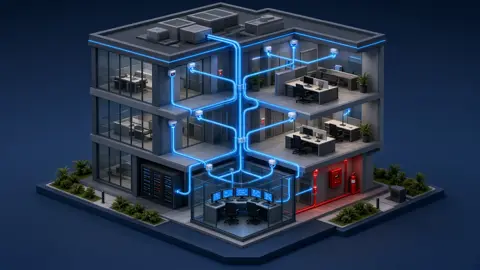
System convergence: PSIM, smart buildings and one control room for everything
Cameras, alarms, access control, fire detection and building systems: how to bring everything into one picture, and what to watch out for.
November 2026 · 4 min read
OT cyber security for low-voltage systems: the network behind cameras and controllers
Security and building systems are part of the OT world. IEC 62443 principles, network separation, remote access management and secure maintenance.
November 2026 · 4 min read
15 questions to ask a low-voltage contractor before you sign
Simple questions that reveal the difference between a quote and a project that will work for years: experience, authorisations, design, cyber, documentation and service.
November 2026 · 4 min read